Establishing a correct logistics strategy in the highly competitive digital sales environment is a critical element for the sustainable growth of a business. For this reason, a comprehensive e-commerce shipping management guide guides businesses in terms of optimizing costs, organizing operational processes, and making technical integrations correctly. As e-commerce volume increases, the importance of delivery speed, cost control, and integration infrastructures becomes more prominent. If you also want to make your shipping operations efficient, you can continue reading the content.
Practical Ways to Reduce Shipping Costs

Since logistics expenses in e-commerce often directly affect profit margins, businesses need to carefully analyze shipping costs. The weight and volume of the shipments, the delivery region, and the terms of the agreement made with the shipping company are the main factors determining the total cost. Therefore, among the methods to reduce shipping costs, correctly determining the packaging standard and avoiding errors that unnecessarily increase the volumetric weight (desi) are among the first steps.
In addition, taking price offers based on the shipment volume of the business and regularly comparing the rates offered by multiple shipping companies provides a cost advantage. Businesses that make regular shipments can obtain more advantageous rates depending on shipment density, thereby pulling total e-commerce shipping costs down to a predictable level.
CLICK FOR THE MOST CONVENIENT SHIPPING RATES
Price and Volumetric Weight (Desi) Optimization by Shipment Volume
When determining prices in e-commerce shipments, the volumetric weight (desi) calculation is often more decisive than the actual weight. Properly adjusting package sizes and avoiding materials that unnecessarily increase volume are important in terms of volumetric weight optimization. In this way, the business can achieve significant savings in shipping prices as it does not use unnecessarily large packaging.
As the shipment volume increases, obtaining a price advantage also becomes easier. Businesses with regular and high-volume orders can negotiate special rates with shipping companies. This optimization, made according to shipment density, both reduces costs and provides a more stable shipping management optimization.
How to Set Up Next-Day Delivery Operations?

Next-day delivery is an important service that increases customer satisfaction, but it requires a solid operational plan. Correctly managing warehouse dispatch times, speeding up packaging teams, and aligning shipment collection times with the cargo company form the basis of this process. The business needs to organize its own internal rhythm according to the shipping company's operational calendar.
To make this service sustainable, a seamless flow must be established between stock control, order confirmation times, and shipment preparation processes. Routing orders to the packaging area from the moment they hit the system and quickly creating labels through the shipping panel makes the next-day delivery operation seamless.
What is Shipping Integration, and Which Systems is It Done With?
Shipping integration is the provision of automatic data flow between the e-commerce platform and the shipping company. Automatic transfer of order information to the panel, acceleration of label generation processes, and real-time tracking of shipment status are the most important benefits provided by integration. Thus, manual processing errors are reduced and the operational load is alleviated.
E-commerce integration solutions are generally provided via API or ready-made modules. Platforms such as Trendyol, Hepsiburada, WooCommerce, Shopify, Ticimax can work compatibly with many shipping companies. Thanks to these integrations, the business can manage all its shipments from a single panel and save a significant amount of time.
Is Shipping Management Possible Without Technical Integration?
E-commerce shipping management is possible without technical integration, but this method usually requires more manual processes. Manually transferring the order to a separate panel, manually preparing the shipping label, and manually tracking the shipment can cause both a loss of time and a risk of error. Therefore, integration is an important requirement, especially for growing businesses.
However, for micro-businesses making low-volume sales, working without integration may be sufficient for a while. Yet, as the number of orders increases, this method becomes unsustainable and reduces the operational efficiency of the business. The speed, accuracy, and operational convenience provided by technical integration are much more advantageous in the long run.
Tips for Using the Shipping Panel
Using the shipping panel is an important control center for businesses. Quick creation of shipments, error-free preparation of labels, and tracking of shipping processes from a single screen are among the main benefits of using the panel. Doing correct user authorization in the panel is also important for internal order.
Regularly analyzing shipment history, reviewing return rates, and creating cost reports based on volumetric weight are important outputs that can be obtained from the shipping panel. This data helps the business make the right decision on which shipping company to work with in the future and strengthens the overall shipping management optimization process.
Integrated Management of Return Processes with Shipping

Return processes are one of the most sensitive points of e-commerce operations. Automatic communication with the shipping company from the moment the return request lands in the system speeds up the process and offers a more professional experience to the customer. Therefore, the integration between return process management and shipping systems is of great importance.
Generating automatic notifications after the return products reach the warehouse, accelerating stock updates, and quickly adding products suitable for resale back into the system increases operational efficiency. Without this integration, businesses may experience delays in return processes and customer satisfaction may be negatively affected.
Advantages of Working with Multiple Shipping Companies

Working through a single company in e-commerce can sometimes create disadvantages in terms of price and speed. Thanks to the use of multiple shipping companies, the business gets the physical chance to determine the most suitable option for each type of shipment. Working with different companies for heavy shipments and different companies for light shipments reduces costs.
In addition, working with more than one company provides operational flexibility. Any congestion or delay experienced at one company is easily resolved by shifting shipments to other companies. Thus, the business both provides a price advantage and offers a more stable customer experience.
Navlungo Domestic Integration with E-Commerce Platforms and Software
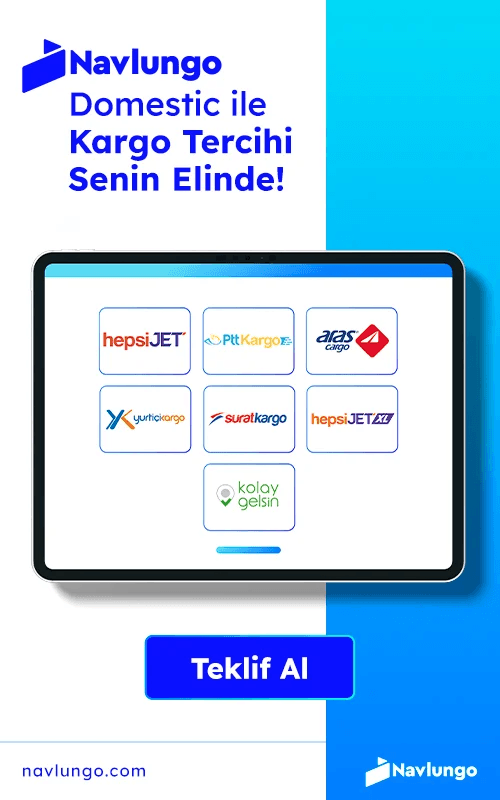
Navlungo Domestic offers a fast and practical integration solution for e-commerce businesses. Automatic transfer of orders, shipment creation from a single panel, and instant tracking of the shipping process provide operational convenience to businesses. This structure is especially important for businesses that prefer to work with multiple shipping companies.
Navlungo Domestic integration works compatibly with Shopify, WooCommerce, Trendyol, Hepsiburada, IdeaSoft, Ticimax, and other e-commerce software. Thus, businesses can manage all their shipping processes from a single point and easily apply all optimizations recommended under the e-commerce shipping management guide.
Operational Flow Between Stock, Warehouse, Inventory, and Delivery
In e-commerce operations, a seamless flow must be established between stock management and delivery processes. Automatically deducting from stock when the order is confirmed, routing it correctly to the warehouse team, and starting the packaging process quickly directly affect delivery performance. The more orderly this flow is established, the more efficiently the shipping processes progress.
Inventory accuracy, warehouse layout system, and the working order of packaging teams are important factors determining delivery speed. Harmonizing all these steps with the shipping panel and integration systems elevates the logistics management of businesses to a stronger level.
Establishing a successful logistics operation in e-commerce is one of the most effective ways to increase sales volume and level up customer satisfaction. Accurate cost analysis, advanced integration solutions, effective use of shipping panels, and a multi-company strategy provide businesses with both speed and cost advantages. Modern integration systems like Navlungo Domestic make it possible to manage all these processes from a single center. Consequently, a well-planned shipping management offers significant contributions to businesses to stand out in competition and run their operations in a more efficient, accurate, and sustainable manner.